
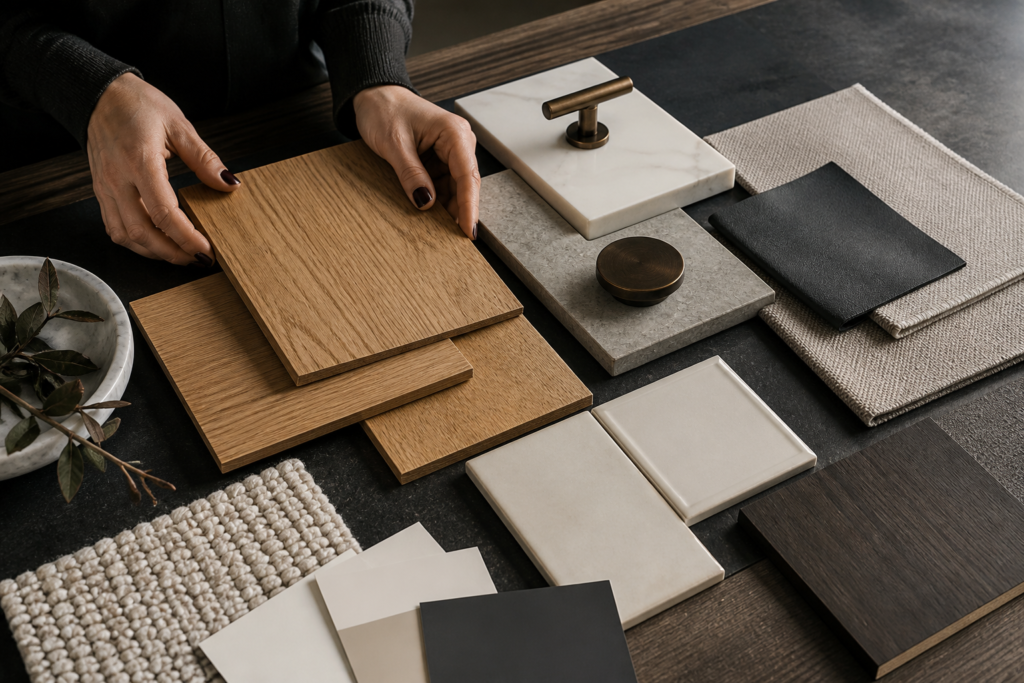
A material earns its place in your home twice: first through its appearance, and then through the way it handles years of real use.
Showrooms make it easy to choose with your eyes alone. At home, however, a surface meets wet boots, hot pans, sunlight, pets, cleaning products, and hurried mornings. The right selection is not necessarily the most expensive or fashionable one. It is the option whose performance, care requirements, and natural character fit the room and the people using it.
Start with performance, then refine the palette
For each surface, ask what it must resist and how often it will be maintained. Entry flooring needs traction and tolerance for grit. Kitchen counters need to handle heat, stains, and frequent wiping. Cabinet finishes encounter oils and repeated touch. Exterior materials must suit the local sun, moisture, temperature swings, and maintenance cycle.
- Wood: warm and repairable, with natural variation that develops over time.
- Natural stone: distinctive and durable, but some varieties require sealing and accept patina.
- Porcelain tile: consistent, low maintenance, and available in many formats; grout selection still matters.
- Engineered surfaces: predictable in color and performance, with limits around heat and edge detailing.
- Metal finishes: capable of adding contrast, though living finishes intentionally change with touch and age.
The most elegant room is one you can use without constantly worrying about it.
Compare samples in the actual room
Color changes dramatically with daylight, artificial lighting, and nearby finishes. Bring large samples home whenever possible. Look at them in morning and evening light, place horizontal materials flat, and hold vertical finishes upright. View the entire group together rather than approving each item in isolation. A warm white beside oak may feel calm; the same white beside a blue-gray stone may suddenly appear yellow.
Ask what happens after installation
Request care instructions before purchasing. Learn whether a finish can be refinished, whether replacement pieces will remain available, and how visible repairs may be. Order appropriate overage for tile and flooring so future damage does not require matching a discontinued dye lot. For handmade or natural products, review the acceptable range of variation rather than judging a single perfect sample.
A cohesive home does not need every finish to match. It needs a disciplined relationship among undertones, textures, and levels of contrast. Choose one or two materials with personality, then let quieter supporting finishes create breathing room. When beauty is considered alongside wear, maintenance, sourcing, and repair, the result feels polished on installation day and continues to work long after the photographs are taken.

Written by
shakesgilles@gmail.com
Keep reading
Related articles

August 25, 2026
Designing a Kitchen Around the Way You Really Live

August 25, 2026
Living Through a Remodel: A Practical Homeowner’s Guide

August 25, 2026